Church Marketing: The Complete Guide
Here’s a question that tells you almost everything about a church’s marketing: if someone new searched for you tonight, would they find you? Not eventually. Tonight, from their couch, half convinced they’re not actually going to go. Church marketing isn’t about volume. It’s about being findable, honest, and clear enough that a stranger can tell in ten seconds whether this might be a place they belong. Done well, it looks like a website that tells the truth fast, a social feed full of real faces instead of stock ones, and a message that sounds the same wherever someone runs into it. Done poorly, it looks like every other congregation borrowing a voice that isn’t theirs. Whether you’re leading a five-campus church or a single congregation trying to be known in your own neighborhood, the fundamentals don’t change. Clarity beats cleverness. Consistency beats one great viral Sunday you’ll never be able to repeat.
Why church marketing feels different from other marketing
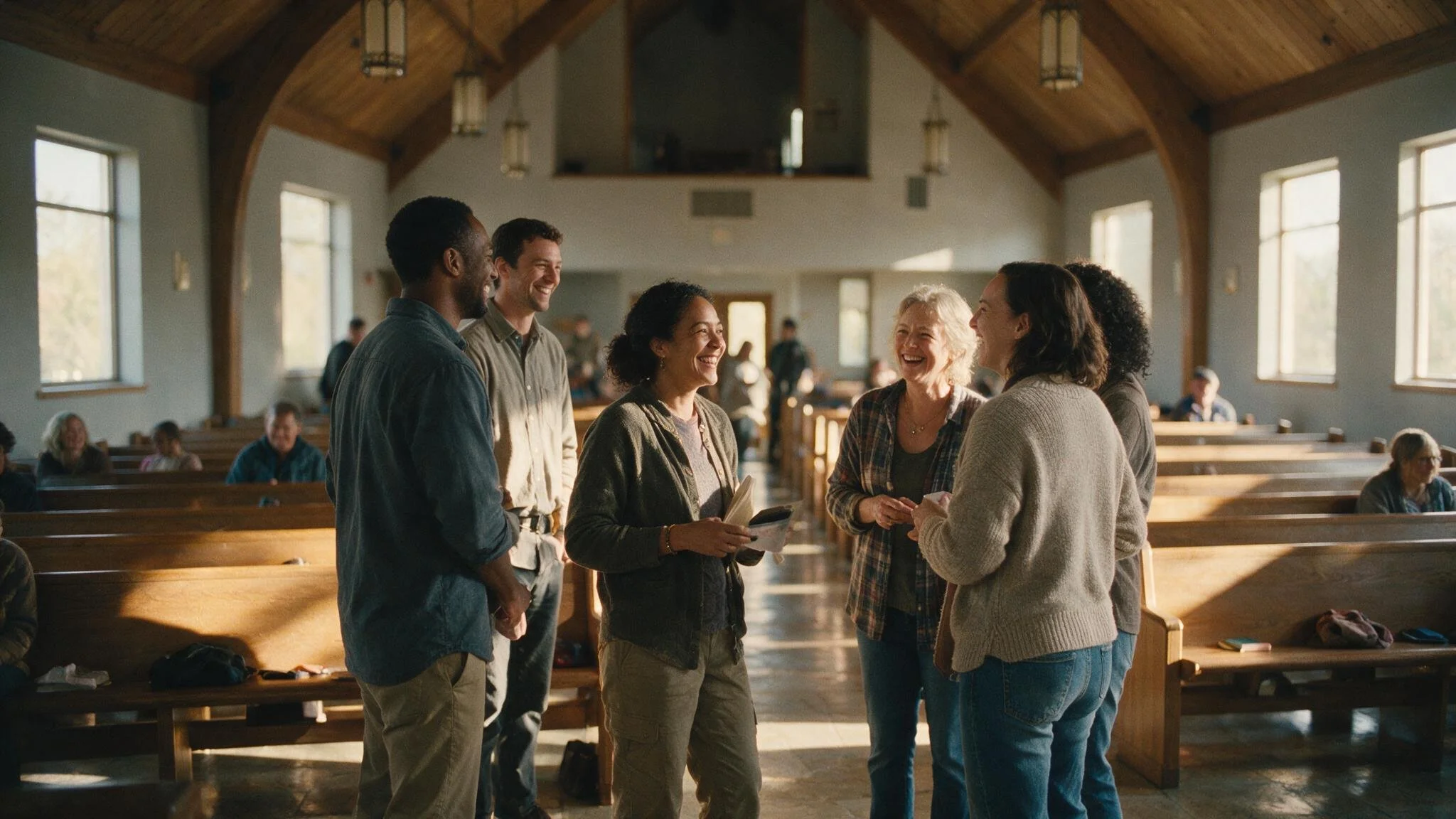
Most marketing advice is written for people selling a product with a price tag. You are selling something too, just not that. You are selling belonging, meaning, and a relationship that outlasts everything else on the market: eternal value instead of monetary value. That changes what your marketing has to do. It has to be honest before it’s persuasive, and clear before it’s clever. Someone landing on your website isn’t comparison shopping the way they would for a mattress or a lawyer. They’re asking something a lot more personal: could I actually belong here? Every headline, every photo, every button on your site should answer that question faster, and more honestly, than the church down the road.
This is also why searches like church marketing agency and church website design tend to have less competition than general small business marketing terms. Fewer agencies specialize in this lane, and fewer still understand both the marketing side and the ministry side well enough to get it right.
What actually matters for a church’s marketing
A handful of channels do almost all the work. Get those right and the rest takes care of itself. Your website is the foundation, the place every social post, every Google search, and every referral eventually sends people. Your social media should show real people and real community, not stock photography, because that is what actually builds trust with someone sizing up your church for the first time. A consistent message across your website, your bios, your newsletter, and your Google Business Profile does something subtle but real: it makes a stranger feel like they already know a little about you before they ever walk in. And local SEO ties the whole thing together. Search church near me or your city church, and if you are not in the map pack, none of the rest matters. They never found you to begin with. Every section below breaks down exactly how to get each one right.
Your website is your front door
Before a first time visitor ever walks through your doors, they walk through your website. They are hunting for service times, your address, what to expect when they get there, what it is like for their kids. If those answers take more than a few seconds to find, you have lost them before they ever get in the car. A clear, current, mobile friendly site built around actual church website design, not a generic template, is the single highest leverage asset a church owns. It works around the clock, never calls in sick, never has an off Sunday. This is also where local SEO earns its keep: a dedicated page for service times and location, written in plain human language, helps both search engines and AI tools like ChatGPT and Google AI Overviews find you and recommend you accurately.

Social media should show real people, not stock photos
The churches that actually grow their reach post real moments: worship gatherings, service projects, small groups, baptisms, kids ministry, not staged photo shoots. Consistency beats production value every time. A shaky phone video of an actual Sunday will outperform a polished stock graphic, because people checking out a new church are not looking for a brochure. They are looking for proof of life. This matters for visibility too, not just vibes: Google, Instagram, and Facebook all reward accounts that show up consistently, and short-form video is currently getting far better reach than static images across every major platform.
Say the same thing everywhere
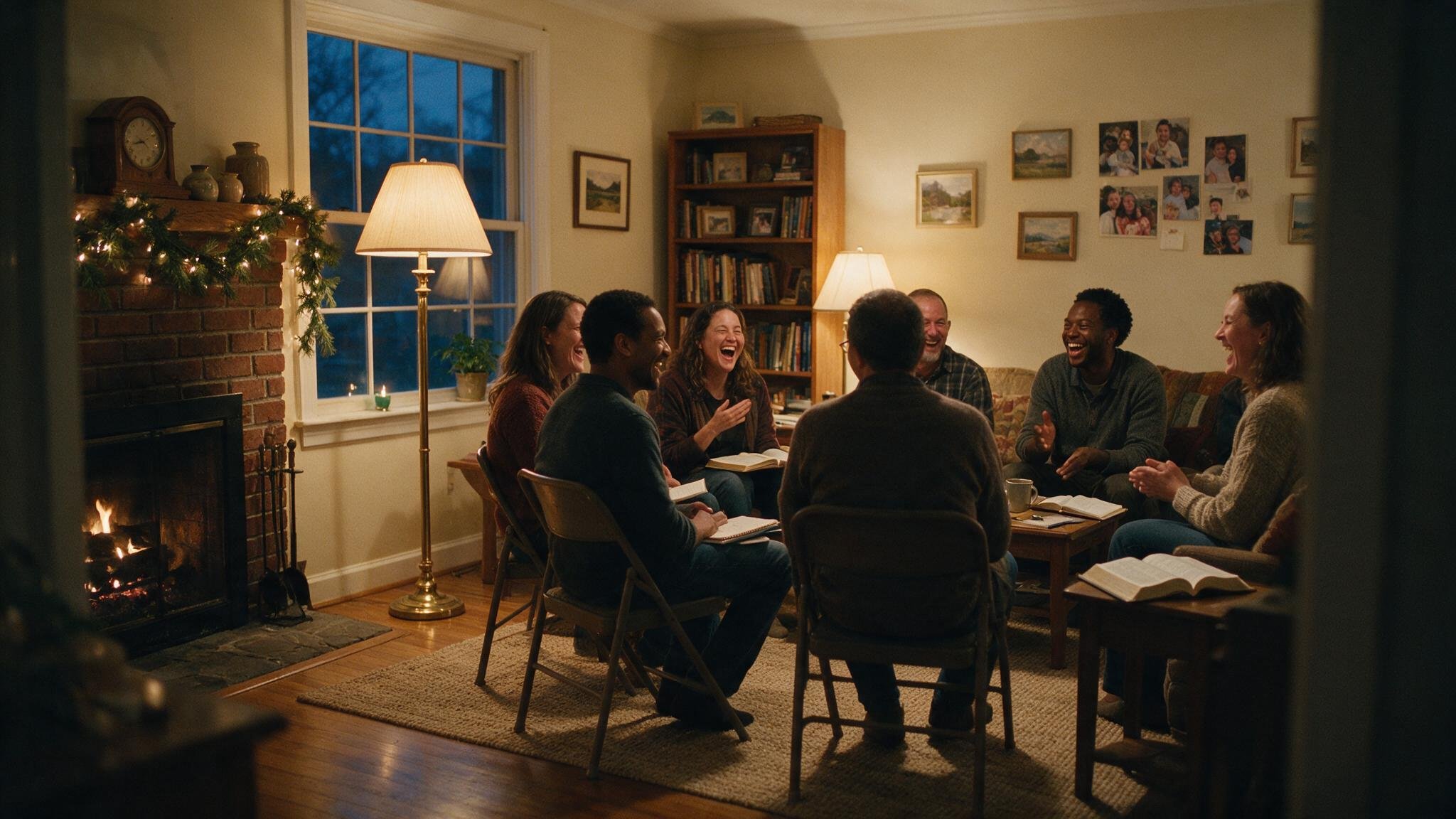
Your mission, your service times, the name you use for a specific ministry: all of it should match across your website, your social profiles, your signage, your bulletin. Inconsistency reads as disorganization, and it quietly chips away at trust before someone ever shakes your hand. Every church has that one bulletin typo everyone quietly forgives. Google does not forgive quite so easily. It cross-references your name, address, and phone number all over the web, and mismatched information in even one place can hold back how well you show up in local search.
Show up in local search
Most people find a new church by searching church near me or a denomination plus their city. That is why local SEO and your Google Business Profile carry so much weight. A claimed, complete profile, accurate name, address, phone number, service times, photos, paired with a steady stream of reviews, does more for your visibility in the local map pack than almost anything else you could spend time on. It also matters for AEO. AI tools like ChatGPT and Google AI Overviews are doing what a helpful neighbor used to do, pointing newcomers toward a church nearby, except the neighbor is now an algorithm reading your Google Business Profile instead of chatting at the mailbox. An incomplete profile quietly costs you visibility in both traditional search and AI search, human and robot alike.

Common mistakes churches make
The same mistakes show up again and again. A website that has not been touched in years. Social media that started strong and quietly died. Marketing language that reads like a sermon instead of an invitation. No simple next step for a first-time visitor to actually take. None of that takes a bigger budget to fix. It takes attention, a plan, and someone actually tracking whether your website, your local SEO, and your social content are pulling in the same direction instead of fighting each other.
A simple framework to start with
Start with the website. It is the foundation everything else points back to, so make the church website design clean, fast, and easy to read on a phone before anything else. Then build a social media rhythm you can actually sustain. Three posts a week, every week, beats a burst of daily posting that burns out by February. Layer in local SEO and Google Business Profile work once those basics are solid. Content, blog posts, devotionals, sermon clips, comes last, after the foundation can actually convert the attention it earns. Skip ahead to content before the website and local SEO are dialed in, and you are just pouring traffic into a leaky bucket.
Where to start
If your church’s marketing feels scattered, start with an honest look at your website and your Google Business Profile. Those two things touch the most people with the least effort, and fixing them first creates the foundation everything else builds on. From there, build outward into consistent social media and local content. Blu Sparrow works with churches and faith-based organizations on exactly this: clarity-first strategy that turns an existing audience into an engaged one, and turns local search visibility into actual visitors walking through the door.
Curious what that could look like for your church? Start with a free strategy call.
Flying brands to reach their potential,
Matt Arnold
Founder + CEO
Blu Sparrow